
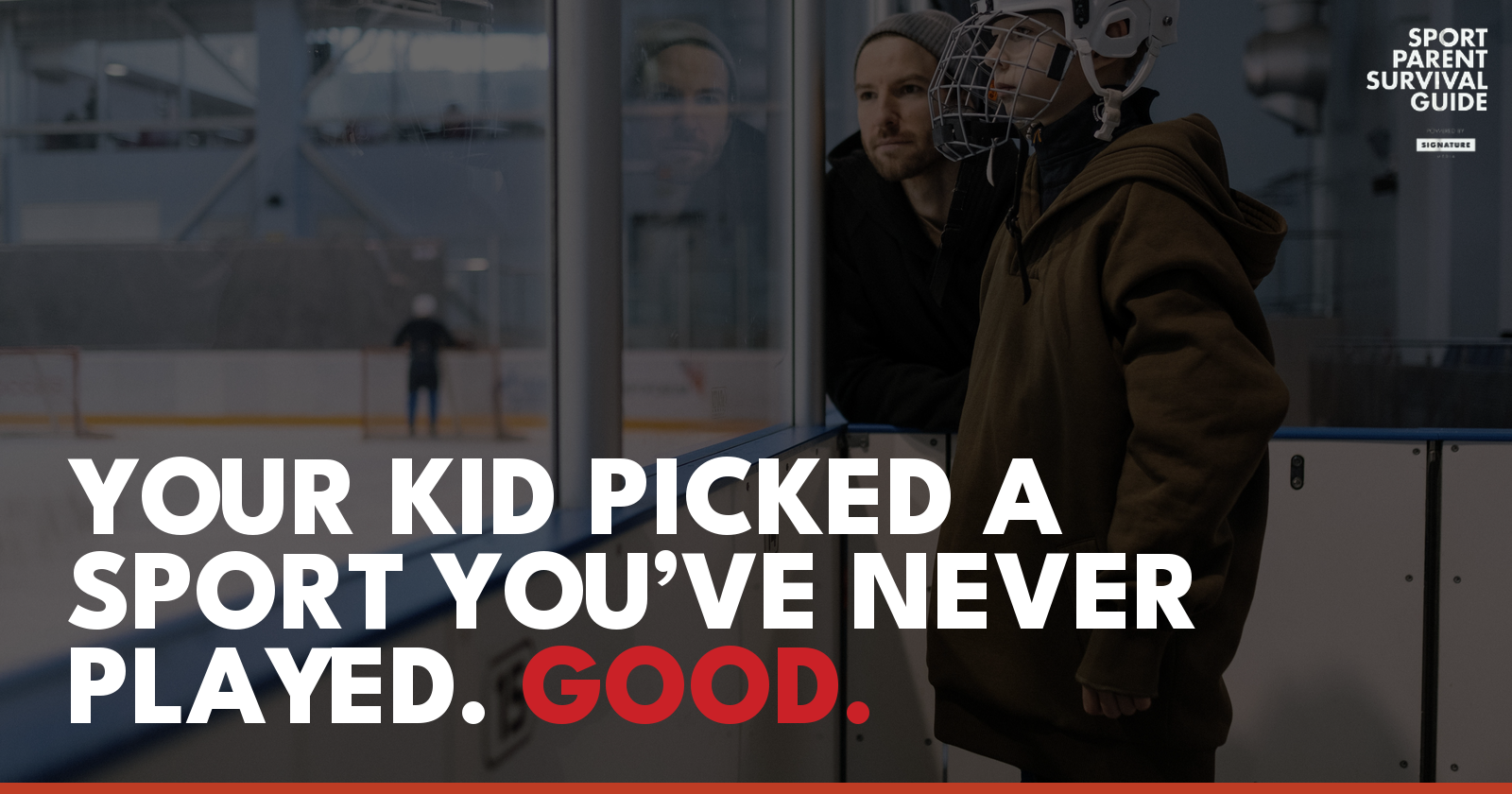
You grew up on soccer fields, or maybe you never played anything at all. Now your kid has fallen in love with lacrosse, or fencing, or water polo, and you spend every game trying to work out what just happened. You cheer at the wrong moment. You ask why the whistle blew and get an eye roll. On the drive home you say "Great game!" and hope that's right.
If that sounds familiar, you're not behind. Plenty of parents end up supporting a sport they've never played, and your kid doesn't need you to be an expert. They need you to be curious, to show up, and to stay out of the way of the people teaching them. Not knowing the sport can even help.
When parents know a sport well, it's hard not to coach from the stands or break down every play on the ride home. Even with good intentions, that can turn the car into a second practice. Kids whose parents don't know enough to critique their technique often get something valuable instead: a parent who just asks how it felt.
Not knowing the sport also gives your athlete something rare. In this one part of their life, they're the expert and you're the learner. For a kid who spends most of the day being told what to do by adults, that's a real confidence boost.
So try to see it as a chance, not a problem. Your job isn't to catch up to the coach. It's to be the person your athlete wants to tell about their day.
Explaining something is one of the best ways to understand it, and that applies to kids and their sport. When your athlete explains a rule, a position, or why a play worked, they have to put into words something they usually just feel. That makes them sharper, and it makes the sport more theirs.
Start small. Ask about one thing you didn't understand at the last game: "What was that call near the end?" "What does your position actually do when the other team has the ball?" Then really listen, ask a follow-up, and let them correct you when you get it wrong.
This week, ask your athlete to teach you one rule or one part of their position. Don't quiz them on it or turn it into a lesson. Just let them be the one who knows.
There's a difference between knowing enough to enjoy the game and knowing enough to second-guess the coach. Aim for the first one.
A few easy ways to get there: watch a college or pro game with your athlete and ask them to point out what matters. You can always ask the coach or a veteran team parent where a beginner parent should start. Learn the basic culture of the sport, too: when it's okay to cheer, what's considered rude from the stands, and what the common calls mean. In some sports, like tennis and gymnastics, the crowd is expected to stay quiet at key moments, and knowing that saves you and your kid an awkward moment.
Sometimes it's one small thing that unlocks the whole day. A first-time swim parent stares at a heat sheet full of numbers until another parent shows them it's just event, heat, and lane, and suddenly they know exactly when to be in the stands watching. A fencing parent watches the point go to the other kid even though both lights went on, and later their athlete explains "right of way," the rule that decides who gets the touch. Moments like that don't make you an expert. They make you a parent who can follow along, and that's plenty.
What you don't need is to watch hours of training videos and come home with tips. The coach is teaching your athlete a system, and advice from you, even good advice, can confuse things.
Parents who don't know the sport often fall back on "Good game?" or "How'd you do?" Those questions aren't bad, but they're easy to shrug off with one word, and they keep the conversation on results.
Questions built on your honest curiosity work better: "I couldn't tell what happened on that last play. What was going on?" "What did the coach have you working on this week?" "What part of the game felt hardest today?" These give your athlete room to explain, and they show you care about their experience too beyond the scoreboard or stats.
And when you really don't know whether something was good, say so: "That looked big, but I honestly couldn't tell. Was it?" Kids appreciate honesty far more than fake enthusiasm.
Every team has a few families who've been around the sport for years. Most of them are happy to help a new parent, and they can explain things in two minutes that would take you a season to figure out alone.
Sit near them at a game and ask questions. Ask what gear is worth buying, how the season works, and what's normal for a kid at your athlete's level. You'll learn faster, and your athlete gets a parent who isn't guessing.
The one trap to avoid is pretending. Kids can tell when a parent is bluffing, and repeating something you read online, or correcting them on a point you're not sure about, can damage your credibility. It can also make them less likely to talk to you about their sport at all.
It's fine to say, "I don't really get this part yet, but I love watching you do it." That sentence tells your athlete everything they need to know: you're paying attention, you're learning, and you're proud of them.
In the end, what your athlete needs from you has very little to do with knowing the rules. They need rides, snacks, and a parent who shows up. They need someone who asks about their day without grading it. They need to know you're interested because it matters to them, not because you're trying to become their coach.
A parent who's learning alongside their kid sends a powerful message: you don't have to be good at something to enjoy it and try your best. That's a lesson your athlete will use long after this season ends.
Over the long weekend, ask your athlete to show the family how their sport works. It might be a quick demo in the backyard with the cousins, or a video of one of their games while they narrate what's happening. Let them be the expert, ask real questions, and keep it short. Then put the ball away and enjoy the rest of the holiday together.
Real talk, tips, and stories for every parent. Free, and written by parents who have been there.
Exclusive savings for your family from Back 2 Sports Hub partners.