
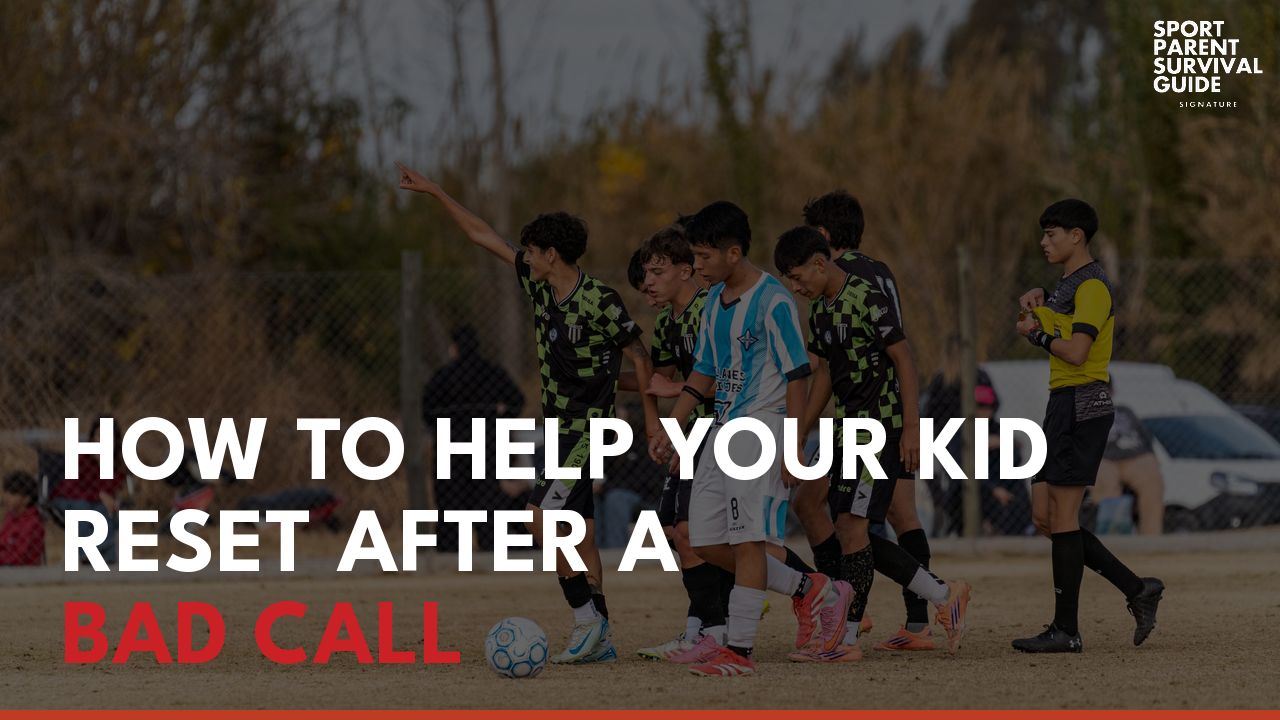
The whistle blows, the call goes against your kid, and you can see it land. The hands go up. The jaw drops. For a second they look to the sideline, checking whether you saw it too, and the next play has already started without them.
A bad call feels personal, especially to a young athlete who has been told all season to work hard and play fair. If they believe the official got it wrong, the whole game can start to feel decided to them, and the next few plays often go with it. That spiral is common, and it is also coachable.
The call already happened. The skill that matters is what your athlete does with the moments after it.
Young athletes don't just disagree with a call. They replay it in their head while the ball is already live again. Attention goes backward, to the official, to whether it was fair, instead of to the one thing they can still control: the next job.
That's why a single perceived missed call can turn into a shift that falls apart, a point given away, or a quarter that never quite recovers. The official isn't going to rewind it. The other team isn't going to wait. And looking to a parent for backup usually makes it worse, because now the athlete is managing your reaction and their own.
Staying in the game that is still being played matters most.
The tool is a short reset your athlete can run in the time it takes to get back in position. Keep it small enough to use in a rec game or a school game, and practice it when the stakes are low.
Name it, then drop it. A quiet "that's a call" or "it's over" beats a long argument with nobody. The point is to end the argument, not to win it.
Pick the next job. One specific task: get back on defense, box out, make the next pass, be ready for the serve. Having a defined next job gives the brain somewhere to go besides the official.
Change the picture. Eyes up, shoulders forward, a clap, a tug on the jersey, a step toward their spot. Create and name a small physical cue helps the body leave the last moment and enter the next one.
This is not about pretending the call was right. It's about refusing to let a call they can't change take the plays they still can.
A few habits make the reset harder, and they're all understandable.
Arguing with the official, even for a second, keeps the athlete in the last play. So does a big show of disbelief. So does checking the sideline for a parent who looks just as mad. None of that brings the call back, and all of it tells the coach and the teammates that the athlete is still stuck on the whistle.
If a call is truly about safety, that's a coach's conversation, not a player's mid-game debate. For the ordinary missed strike, the missed foul, the call that went the other way, the reset is the work.
Your athlete will take their cue from your face before they take it from any speech you give later.
If you throw your hands up, they will too. If you shout at the official, you've just taught them that the call is still the main event. A calm "next play" from the sideline, or simply no reaction at all, is more useful than a detailed case for why the official was wrong.
Save the conversation for the car, and make it about the reset, not the referee. "What did you do after that call?" lands better than "That official cost you the game." If they used the reset, say you noticed. If they didn't, you can ask what their next job was going to be, and leave it there.
You can also practice this when it barely matters: a missed call at practice, a close one in a scrimmage, a game that isn't close. The habit has to exist before the moment feels huge.
A missed call will happen again. The athletes who reset after it are not the ones who never feel it. They're the ones who have somewhere to put it, and a next job to turn toward.
Real talk, tips, and stories for every parent. Free, and written by parents who have been there.
Exclusive savings for your family from Back 2 Sports Hub partners.