
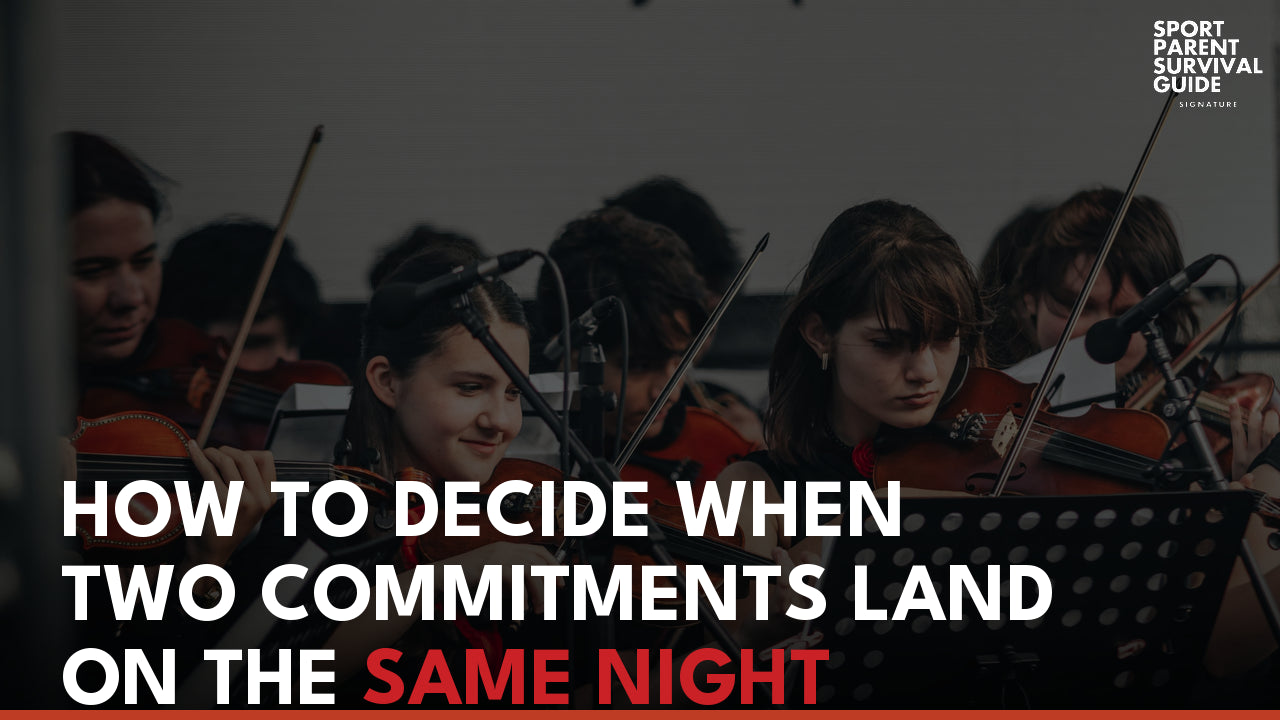
The concert starts at 6:00. The game also starts at 6:00. You're looking at the week on the calendar, and both events are already sitting on the same night. Your kid can't be in both places, and they can already tell which one you're about to treat as optional.
It isn't always a concert. Sometimes it's a play, a curriculum night, a family party, or the school event their teacher has been talking about for a month. This time of year, those collisions pile up. Holidays and end-of-year celebrations, whether that's in the fall, the winter, or the spring, put school concerts, plays, and parties on the same nights and the same times as games and practices. The details change. The math doesn't.
The decision gets made by the night before, and often earlier, once you see the overlap. Waiting doesn't create a third option. What helps is a fair way to choose, and a clear message to the people who need to plan around it.
The tempting shortcuts are "sports always wins" or "school always wins." Both teach the other commitment that it's optional. You want a rule that can land on either side, and that your kid can predict the next time they overlap.
Start with what can't be repeated. A concert, a play, or a one-night school event often happens once. A mid-season weekday game is often one of many. That isn't always the answer: a game they're starting in, or the last meeting with a team they may not see again, can be the one-time event too. Name which one truly can't come back, and be honest if the answer is close.
Then ask your kid, once, without loading the question. "Both of these matter. If you could only do one, which one would you be glad you didn't miss?" Listen to the answer. You still make the call, but they should hear that their vote counts, especially when the two events are honestly tied.
Once they've told you which one they'd be glad they didn't miss, help them think it through. Which event only happens once? Who's counting on them, like a choir that needs every voice or a team that's already short on players? And how will they feel about it the next morning? Kids who are old enough to have two commitments are usually old enough to answer those questions honestly.
Then let them feel the miss. Whatever they pick, they're giving something up, and it's okay if they're quiet in the car or a little sad when the photos show up in the group chat. You don't need to fix it or talk them out of it. Saying "I know you really wanted to be at both" does more than any pep talk.
If it's the game they're missing, it helps to tell them what will actually happen, because kids tend to picture the worst. A teammate will cover their position, and the team will play on. Most teammates won't think twice about it, and plenty of them have missed a game for a recital, a family wedding, or a test of their own.
The week after, help them show up a little extra. That might mean getting to practice early, asking a teammate what they missed, or thanking the music teacher for working with the schedule. It shows them that missing one thing doesn't mean letting people down, as long as they come back ready.
This is practice for something bigger. Your kid will spend the rest of their life choosing between things that matter to them, and the conflicts only get harder from here. Getting to work through one at 10 or 13, with you right beside them, is a gift, even if it doesn't feel like one on a Tuesday night.
As soon as you've made the call, tell everyone early. A few days' notice gives the coach and the teacher time to plan. Help your kid send a short note, or say it in their own words if they're old enough. Include which night it is, which event they'll be at, and a one-line reason, like "She has her choir concert that night, and it's the only performance of the season." Then say thank you. A real reason shows it isn't a lack of commitment. Coaches and teachers can plan around a clear message. They can't plan around a maybe.
If your kid can offer something useful, put it in the same note: they'll be at practice the next day, they'll be back for Saturday's game, or they'll pick up the music ahead of time. Keep it to a few sentences. The goal is to explain the choice, not to apologize for caring about two things.
Then write the rule down so you can reuse it: we pick the event that can't be repeated, and if it's a tie, you get a say. The point is that the next conflict doesn't turn into a brand-new argument.
The ride home is where a hard choice turns into a referendum on the season if you let it. Don't replay "we should have gone to the game." Don't over-correct with a speech or a promise that sports will never lose again.
A simple line is enough: "I know that was hard, and I'm glad we decided it the way we did." If they're upset, let them be upset without reopening the choice. The thing you want them to take into the next collision is that both events mattered, you picked with a rule they can see, and missing one night doesn't make the other part of their life less real.
These nights will happen again. You won't always love the answer. What you can give your kid is a decision made in time, a message that lets the coach and the teacher plan, and a ride home that doesn't turn into a trial.
Real talk, tips, and stories for every parent. Free, and written by parents who have been there.
Exclusive savings for your family from Back 2 Sports Hub partners.